
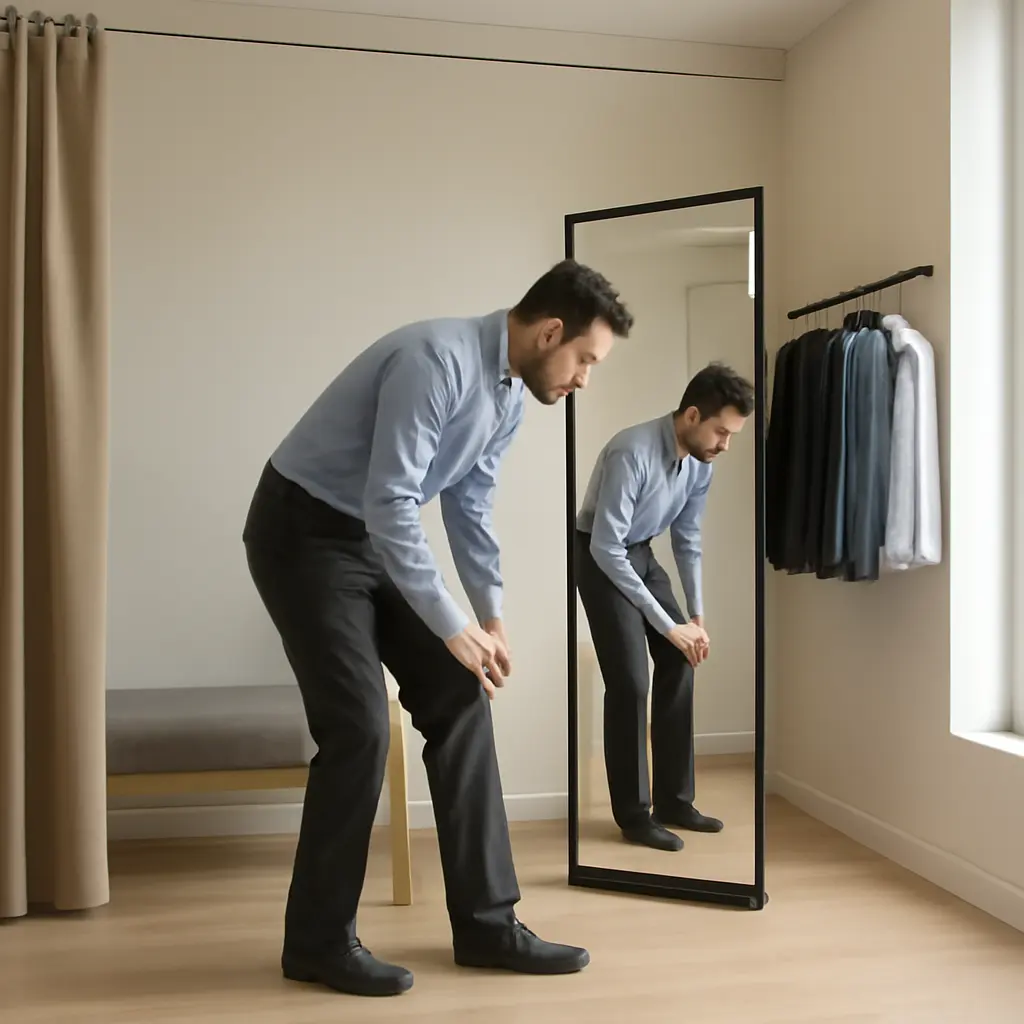
Trouser fit is the relationship between a pair of trousers and the wearer’s body, movement, and outfit—not simply the number on the label. The wrong length, rise, width, or fabric can quietly make otherwise polished clothes look unbalanced. A well-known rule of thumb from menswear tailoring is that trousers should break deliberately over the shoe, while fit guidance from retailers such as GQ and Levi’s likewise emphasizes proportion, comfort, and intended silhouette. The mistakes below explain how to spot common problems, why they matter, and how to correct them without chasing a single trend.
Trouser Fit Errors That Undermine Outfit Proportion
Trouser fit is the way a garment’s waist, rise, seat, leg, and hem correspond to the body and the rest of an outfit. There is no universal measurement that makes trousers “correct”: the intended cut, footwear, occasion, and personal comfort all matter. The practical goal is visual balance without pulling, bunching, or restricting movement. Because clothing sizes vary among brands, the label alone is a poor substitute for checking how the garment sits and behaves.
Mistake 1: Choosing the Wrong Hem Length
Hem length is where the trouser leg meets the shoe. A hem that is too long can form heavy folds at the ankle, often called excessive break or stacking; one that is too short may expose more sock or leg than the wearer intends. A slight break—a modest crease where the front hem touches the shoe—is a versatile option for many straight or tapered styles. Cropped and wide-leg trousers are deliberate exceptions, so assess them by the intended silhouette rather than by a traditional break rule.
Check the hem while wearing the shoes you plan to pair with the trousers. Different shoe heights and shapes change how fabric falls. If excess fabric pools around the ankle, a tailor can shorten the trousers; if the hem is too high, adding length may be limited by the available fabric. Alteration is usually most successful when the intended shoe and styling are decided first.
Mistake 2: Wearing a Rise That Distorts the Silhouette
The rise is the distance from the crotch seam to the top of the waistband. A rise that is too low can cause the waistband to sit below its intended position, encourage shirt untucking, and make movement uncomfortable. A rise that is too high can feel restrictive or create excess fabric through the front, depending on the cut and body proportions.
The right rise allows the trousers to sit securely without being pulled upward or held in place by a tight belt. When trying them on, sit, stand, and walk: the waistband should remain comfortable, and the front should not tug sharply. Rise is difficult to alter substantially, so it is generally better to choose a different model than to rely on tailoring to transform it.
Mistake 3: Ignoring the Waist and Seat
The waist is the waistband’s position around the body; the seat is the area covering the hips and backside. A waistband that gaps at the back may need adjustment, while one that digs in or causes diagonal pulling is likely too tight. Across the seat, horizontal tension lines can signal insufficient room. Conversely, excess fabric that hangs or collapses may indicate a cut that is too generous.
A belt can secure trousers that fit reasonably well, but it should not be used to disguise a major sizing problem. Look for a smooth drape when standing and enough ease to sit and climb stairs comfortably. Waist adjustments are common tailoring work, but changing the seat or crotch fit can be more involved; a skilled tailor can assess whether the garment has enough seam allowance.
Trouser Shape Mistakes That Disrupt Visual Balance
Once the waist, rise, and length are working, leg shape determines how trousers relate to shoes, jackets, and the wearer’s proportions. Straight, tapered, slim, and wide-leg cuts can all look intentional. Problems arise when the volume or taper conflicts with the garment’s purpose or the rest of the outfit—not simply because a particular cut is fashionable or unfashionable.
Mistake 4: Choosing a Leg Width That Fights the Outfit
Leg width is the amount of room through the thigh, knee, and hem. Very tight trousers can restrict movement and create visible pulling; overly roomy trousers may overwhelm a compact outfit if the rest of the proportions are not considered. A tapered leg narrows toward the ankle, while a straight leg maintains a more consistent width. Neither is automatically more flattering: the key is a clean line that suits the wearer, fabric, and footwear.
Use the whole outfit as the test. A wider trouser often benefits from a hem that falls cleanly over a substantial shoe, while a narrow leg can pair neatly with a sleeker profile. Avoid combining multiple competing proportions by accident—for example, a very narrow hem that catches awkwardly on a large boot. These are styling choices, not fixed rules, and a full-length mirror provides a more reliable check than judging the trousers in isolation.
Mistake 5: Overlooking Fabric Drape and Stretch
Drape describes how fabric hangs and moves under its own weight. Lightweight fabrics may ripple or cling, while heavier cloth can hold a sharper line but feel bulky in warm conditions. Stretch fibers can improve ease of movement, but stretch does not compensate for a cut that is too small. Fabric composition and construction also affect how trousers recover after sitting and how they respond to pressing or cleaning.
The Federal Trade Commission’s clothing-labeling guidance explains that most textile products must disclose fiber content, helping shoppers compare materials rather than relying on appearance alone. Check the care label as well: frequent high-heat drying can shrink or damage some garments. Try trousers while moving, and inspect the fabric after sitting briefly; persistent knee bags or strong creases may suggest that the material or fit is not suited to the intended use.
Mistake 6: Treating Pockets, Pleats, and Cuffs as Afterthoughts
Pleats are folds at the front waist that provide extra room and shape; cuffs are turned fabric at the hem. Both can be intentional design details, but their effect depends on the cut. Pleats that gape may indicate tension across the waist or seat, while pockets that flare open often signal insufficient room or a poor match between the garment and body. Cuffs add visual weight at the hem and may change how a trouser leg balances with a shoe.
Check these details in motion as well as while standing. Keep bulky objects out of trouser pockets when evaluating fit, since a phone or wallet can distort the drape. If pockets still pull open or pleats remain strained, try a different size or cut rather than assuming the detail itself is the problem. Cuffs are best judged in relation to fabric weight, hem length, and footwear.
How to Check Trouser Fit Before Wearing It
A fitting-room check can catch most quiet fit problems before they affect an outfit. The U.S. Bureau of Labor Statistics’ Consumer Expenditure Surveys track household spending on apparel, but there is no single authoritative statistic showing how often trouser fit mistakes occur. A practical, repeatable fitting routine is therefore more useful than unsupported claims about how many people buy the wrong size.
- Wear the shoes you expect to use with the trousers and check the hem from the front and side.
- Fasten the waistband without pulling it tight; confirm it stays in place without digging in or gaping.
- Sit, walk, and bend. Watch for tightness at the crotch, seat, and thighs, as well as fabric that pulls sharply.
- Look for a smooth line through the legs, allowing for the intended cut and natural folds in the fabric.
- Check pocket openings, pleats, and cuffs, then read the care label before deciding whether the garment suits your routine.
A useful visual guide would compare the same trousers with excessive stacking, a slight break, and a cropped hem, alongside examples of waistband gaping and seat tension. Such a chart should be treated as an illustration of fit effects, not as a universal measurement standard.
Conclusion: Small Trouser Corrections, Sharper Outfits
The most common trouser mistakes are an unsuitable hem, an uncomfortable rise, poor waist or seat fit, a leg shape that clashes with the outfit, fabric that does not drape as intended, and neglected details such as pockets or cuffs. Check fit in motion, assess trousers with the shoes you will wear, and use tailoring for adjustments that are practical for the garment. Before buying, compare the cut and fabric with your needs rather than trusting the size label alone. A few deliberate checks can make an outfit look more balanced while making the trousers more comfortable to wear.
Sources: Federal Trade Commission, Care Labeling of Textile Wearing Apparel and Certain Piece Goods, https://www.ftc.gov/business-guidance/resources/clothing-labeling; GQ, How Pants Should Fit, https://www.gq.com/story/how-pants-should-fit; Levi’s, Men’s Jeans Fit Guide, https://www.levi.com/US/en_US/features/men-jeans-fit-guide; U.S. Bureau of Labor Statistics, Consumer Expenditure Surveys, https://www.bls.gov/cex/.