
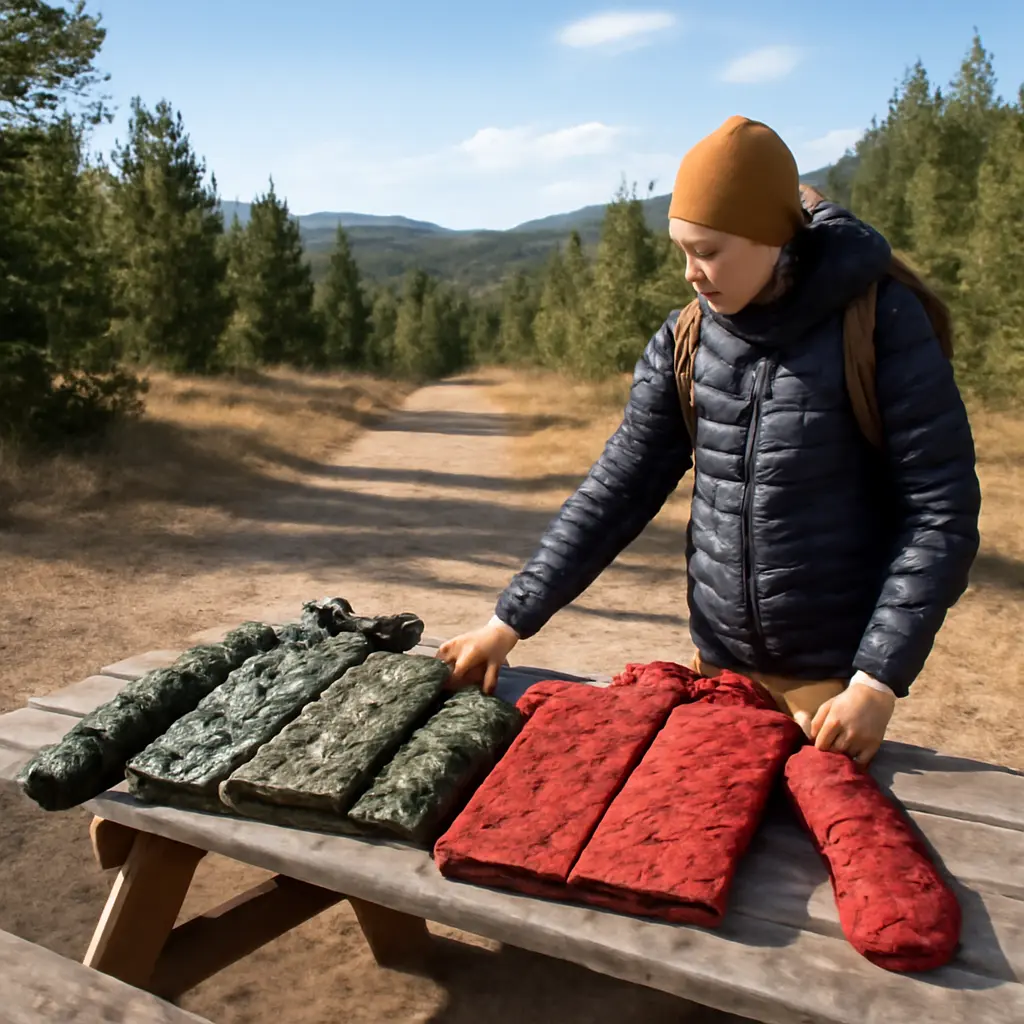
A puffer jacket’s fill power is a measure of how much space a given weight of down occupies—not a direct warmth score. That distinction explains why two jackets that look similarly lofty can differ in weight, packability, price, and performance. The International Down and Feather Bureau defines fill power through a standardized test of down’s loft, while outdoor brands use the result alongside fill weight, construction, and fabric to describe a jacket. Comparing these factors—not the number alone—helps shoppers judge whether a puffer suits everyday wear, travel, or cold-weather use.
Fill power explains down insulation’s loft
Fill power is the volume, in cubic inches, occupied by one ounce of down under a specified laboratory test. The International Down and Feather Bureau (IDFB) describes it as a measure of down’s “filling capacity” or loft. A higher result means the down expands more for its weight; it does not, by itself, say how much insulation a complete jacket contains.
Common product labels include 550, 650, 700, 800, and 900 fill power. These figures typically refer to down insulation, not synthetic fill. Higher-fill-power down can provide a given amount of loft with less material, which can make a jacket lighter and easier to compress. But a jacket with more ounces of lower-fill-power down may have more total loft than one using a smaller quantity of higher-fill-power down.
Test conditions matter, too. The IDFB publishes methods for measuring down and feather properties, and results depend on standardized sample preparation and testing procedures. When comparing products, look for the test standard or certification if a brand provides it; don’t assume every number is directly comparable across every market or label.
Fill power versus fill weight
Fill weight is the actual mass of insulation inside a garment, commonly stated in ounces or grams. Fill power describes loft per unit of down; fill weight describes how much down the jacket contains. Together, they provide a more useful picture than either figure alone. For example, 800-fill-power down is more efficient by weight than 600-fill-power down, but a jacket containing substantially less of it is not automatically warmer.
Fill power versus warmth
Warmth depends on the jacket’s total insulation and how effectively its design traps still air around the wearer. Fill power can help manufacturers achieve loft with less weight, but warmth also varies with fill weight, baffle size and layout, coverage, fit, wind resistance, and the wearer’s activity and clothing layers. There is no universal fill-power number that guarantees a particular comfort temperature across brands and designs.
Fill power shapes weight, packability, and price
Once fill power is understood as a measure of down efficiency, its practical trade-offs become easier to assess. Higher-loft down can deliver a target level of loft using less material, making it attractive for lightweight and compressible jackets. It can also cost more, so a high number may reflect a premium material choice rather than a jacket that will be warmer in every situation.
High fill power for lightweight use
Higher-fill-power down is often used in garments designed to minimize weight and packed size, such as jackets for backpacking or mountaineering. For example, the Outdoor Research Helium Down Hoodie has been sold with 800-fill-power down. That specification signals high loft efficiency, but a buyer still needs to check the garment’s fill weight, coverage, hood design, and intended conditions before judging its warmth.
Moderate fill power for everyday value
Jackets in the 550–700 range can be practical choices for commuting, casual wear, and general travel. A lower number does not make a jacket inherently poor: a well-designed garment can use a larger quantity of moderately rated down to provide substantial insulation. For less demanding use, a shopper may prefer a better fit, durable shell, or lower price over the smallest possible packed size.
Construction can change what the number delivers
Down is held in compartments called baffles. Baffle design affects how insulation is distributed and can influence cold spots, bulk, and mobility. Stitch-through construction joins the outer and inner fabrics directly, while box-wall construction creates deeper compartments; neither label alone determines performance, but construction should be considered alongside fill power and fill weight. A jacket’s shell fabric, hem and cuff closures, hood, and fit also affect how well it retains warmth.
Down quality and synthetic insulation serve different needs
Fill power applies to down, a natural cluster insulation; it is not a standard rating for synthetic insulation. Synthetic jackets are usually described by the type and weight of their insulation instead. The distinction matters because insulation behaves differently when damp, and a fill-power comparison cannot be used to rank down against synthetic materials directly.
Down offers strong loft for its weight
Down clusters trap air and can be compressed for storage, which helps explain their use in lightweight, packable jackets. Their loft can be impaired when the insulation becomes wet, so shell treatment, layering, and care matter in damp conditions. Responsible sourcing is another consideration: the Responsible Down Standard, administered by Textile Exchange, sets requirements intended to protect animal welfare throughout the supply chain.
Synthetic insulation is a separate comparison
Synthetic insulation is commonly made from polyester fibers and is often selected for conditions where moisture management and easier care are priorities. It may retain more insulating ability when damp than untreated down, but performance varies by material and garment, and synthetic fill can be bulkier for comparable warmth. Since synthetic products do not use the down fill-power scale, compare them using their own specifications and the manufacturer’s use guidance.
A practical way to compare puffer jackets
A useful comparison starts with the intended activity and climate, then checks the insulation quantity and garment design. When available, product details such as fill weight, fill power, total garment weight, and construction offer more context than a single headline rating. A chart comparing these specifications across jackets can make trade-offs visible, but it should not be treated as a direct warmth ranking unless the products have been tested under comparable conditions.
- Choose the use first: everyday commuting, travel, static cold-weather wear, or high-output activity.
- Compare fill power and fill weight together. Higher fill power indicates more loft per unit of down, not necessarily more insulation in the jacket.
- Check construction, coverage, fit, hood, cuffs, hem, and shell fabric for features that affect heat retention and comfort.
- Consider moisture exposure, care needs, material sourcing, and price—not just the loft rating.
- Use brand temperature claims cautiously. Layering, wind, humidity, activity, and individual comfort make ratings difficult to compare across manufacturers.
As a real-world illustration, a compact 800-fill-power jacket may be attractive to a hiker who wants to reduce pack weight, while a roomier everyday jacket with lower-fill-power down may better suit someone prioritizing coverage and value. Neither is automatically the warmer choice: the amount of insulation and the rest of the design determine how each performs in use.
Conclusion: compare the whole jacket, not just fill power
Fill power describes down’s loft per unit of weight, while fill weight tells you how much down is in the jacket. Together with baffle construction, fit, shell, and intended conditions, these specifications help explain differences in warmth, packability, and cost. Before buying, compare the full product details and consider how you will use the jacket; a higher number is most valuable when its weight and compressibility advantages match your needs.
Sources: International Down and Feather Bureau, IDFB Testing Regulations, https://idfb.net/testing-regulations/; Textile Exchange, Responsible Down Standard (RDS), https://textileexchange.org/standards/responsible-down/; Outdoor Research, Helium Down Hoodie, https://www.outdoorresearch.com/products/mens-helium-down-hoodie-300191; REI Co-op, Down Jackets: How to Choose, https://www.rei.com/learn/expert-advice/down-jacket.html.