
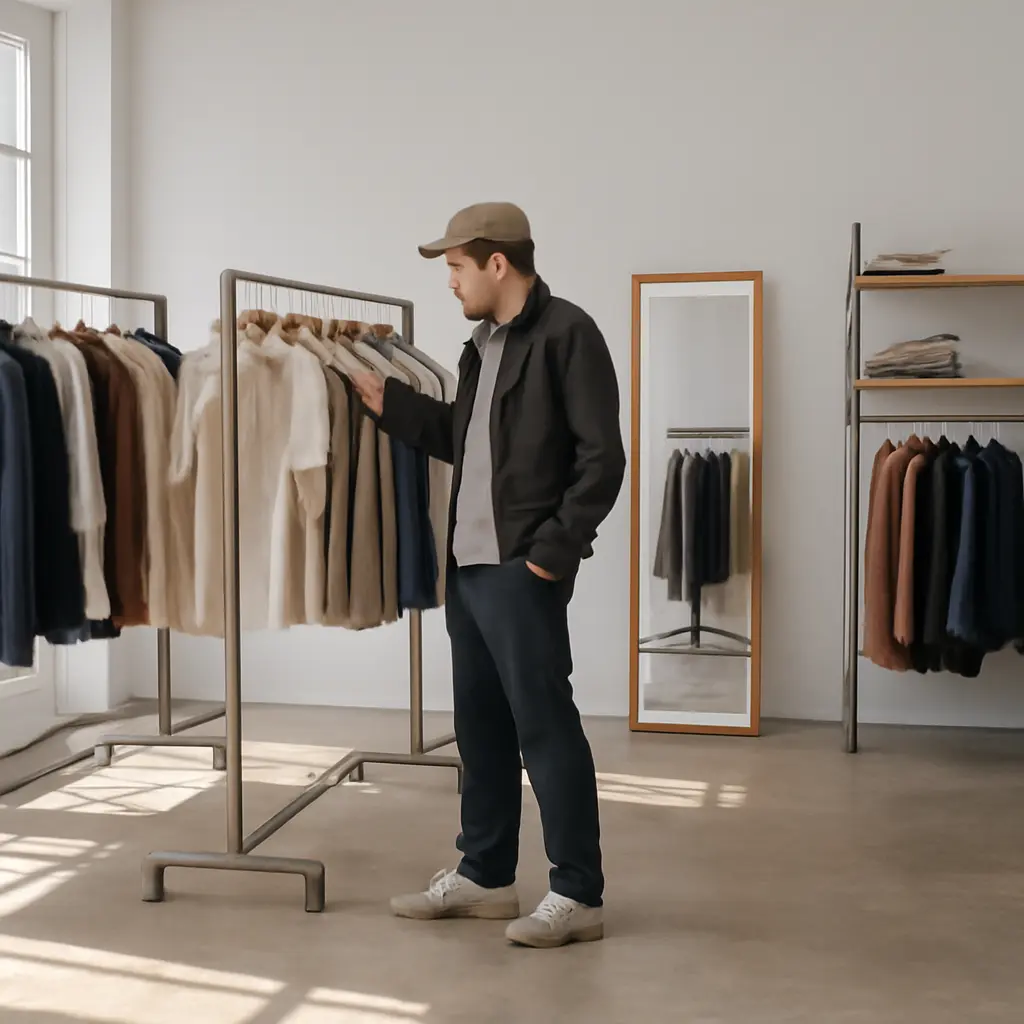
Streetwear outfits feel intentional when a few dependable pieces balance comfort, proportion, and personal expression. Here, “anchor pieces” means versatile garments or accessories that make an outfit easier to build and wear: a graphic or plain T-shirt, a hoodie, relaxed trousers, denim, a jacket, sneakers, and a cap or other small accessory. The best choices are not defined by a price tag or a trend cycle; they earn their place through fit, repeat wear, and compatibility with the rest of a wardrobe. That approach matters in a fashion market shaped by rapid trend turnover: ThredUp’s 2024 Resale Report estimated that the U.S. secondhand apparel market grew 11% in 2023, a reminder that shoppers increasingly have reason to consider longevity as well as novelty.
How Anchor Pieces Build a Streetwear Outfit
An anchor piece is a clothing item or accessory that supports multiple outfits because its cut, color, or function works with other pieces. There is no single official fashion-industry definition, so this is a practical styling definition rather than a formal category. In streetwear, anchors often include basics, statement garments, outerwear, footwear, and accessories. Their shared characteristics are repeatability, comfort, and enough visual flexibility to work with different combinations.
The seven pieces below are useful starting points, not a mandatory shopping list. A person who walks extensively may prioritize sneakers; someone in a cold climate may get more value from a jacket. The U.S. Environmental Protection Agency has noted that textiles are part of the municipal solid-waste stream, making care, reuse, and thoughtful purchasing relevant considerations alongside style. A useful outfit-planning graphic would place these seven anchors around a central outfit, with lines showing how each item can pair with several others.
1. The T-shirt: A Flexible Base Layer
A T-shirt is a short-sleeved knit top that can serve as the outfit’s quiet foundation or its main graphic statement. A solid, well-fitting tee pairs readily with denim, cargo trousers, sweatpants, and layered outerwear; a printed tee can introduce a band, artist, sports, or subculture reference. Choose a neckline and shoulder fit that work under a hoodie or jacket, and check the garment’s care label to help preserve its shape and print.
2. The Hoodie: Comfort and Layering
A hoodie is a sweatshirt with an attached hood, commonly made from fleece or loopback knit fabric. Its volume gives a streetwear outfit a relaxed silhouette, while the hood and front pocket add practical details. It can be worn under a coat, over a T-shirt, or as the main top layer in mild weather. To keep proportions balanced, pair an oversized hoodie with trousers that have a deliberate shape rather than simply adding excess volume everywhere.
3. Relaxed Trousers: Shape Without Restriction
Relaxed trousers are pants cut with additional room through the hip or leg compared with a slim fit. The category includes cargo pants, workwear-inspired pants, track pants, and loose-cut chinos. Their shape helps establish a contemporary streetwear silhouette and leaves space for movement. Consider rise, inseam, fabric weight, and pocket placement; these details affect both comfort and how the hem sits over a sneaker.
4. Denim: A Durable Everyday Option
Denim is a durable cotton twill fabric, most often used for jeans and jackets. Straight-leg, relaxed, and wide-leg jeans are common streetwear choices because they offer structure without requiring a highly formal fit. A darker wash can work as a quieter base, while faded or distressed denim brings more visual texture. For a reliable outfit, match the jean’s volume to the shoe and top: a wider leg can balance a substantial sneaker or an oversized sweatshirt.
How Outerwear and Footwear Complete Streetwear Anchors
Once the base layers and trousers establish comfort and silhouette, outerwear and footwear determine how the outfit handles weather and where its visual emphasis falls. These pieces often carry more construction detail than a basic tee, so condition, material, and fit matter. They are also practical anchors: a good jacket can extend the use of lighter layers, while versatile shoes can connect outfits built around different colors and shapes.
5. The Jacket: Function with a Strong Outline
A jacket is a short outer garment that adds warmth, weather protection, or structure. Useful streetwear types include denim jackets, coach jackets, varsity jackets, bombers, and lightweight shells. Each has a distinct visual character, but the best option depends on climate and routine. Check whether the jacket allows room for a hoodie, whether its length works with the trousers, and whether its closures and fabric suit the conditions in which it will be worn.
6. Sneakers: The Grounding Piece
Sneakers are athletic-inspired or athletic-purpose shoes that have become central to everyday streetwear. Their shape, color, and sole profile can shift an outfit from understated to bold, while comfort and fit determine whether they work for daily use. The American Podiatric Medical Association advises choosing shoes that fit properly and suit the activity; for streetwear, that means considering foot support and intended wear, not appearance alone. A neutral pair can repeat across many outfits, while a colorful pair can become the look’s focal point.
How Accessories Personalize Streetwear Anchors
The final anchor is smaller than a jacket or pair of jeans, but it can make an outfit feel considered. Accessories bring in color, function, and personal references without requiring a complete wardrobe change. Because they sit close to the face or add a distinct shape, even one well-chosen item can give a familiar outfit a different mood.
7. The Cap or Everyday Accessory: A Personal Finishing Touch
A cap is a brimmed head covering, often a baseball cap or beanie in casual streetwear. It can echo a color elsewhere in the outfit, add a logo or graphic, or provide practical sun protection or warmth. If headwear is not part of your routine, the seventh anchor can instead be a crossbody bag, belt, or simple piece of jewelry. The principle is the same: choose an accessory that serves a purpose and connects naturally with the outfit rather than adding detail for its own sake.
A Practical Outfit-Building Example
For a simple everyday combination, start with a plain T-shirt, relaxed dark denim, and clean sneakers. Add a hoodie for warmth, then layer a coach jacket if the weather calls for it. Finish with a cap that repeats one color from the shoes or jacket. Each item has a clear role, and the outfit can be adjusted by swapping the denim for cargo trousers, the hoodie for a crewneck, or the jacket for a weatherproof shell. This kind of mix-and-match system illustrates why versatile pieces can be more useful than a closet built around one-off trends.
Conclusion: Build Around Wearability and Personal Style
A T-shirt, hoodie, relaxed trousers, denim, jacket, sneakers, and a cap or everyday accessory can quietly anchor a strong streetwear wardrobe. Together, they cover base layers, silhouette, weather, movement, and personal expression. The most effective versions are the ones that fit well, suit the wearer’s routine, and work with several items already owned. Before buying something new, try building a few outfits from what is already in the closet; then replace gaps thoughtfully, care for the pieces, and choose quality and usefulness over short-lived hype.
Sources: ThredUp, 2024 Resale Report, https://www.thredup.com/resale/2024; U.S. Environmental Protection Agency, Facts and Figures about Materials, Waste and Recycling: Textiles, https://www.epa.gov/facts-and-figures-about-materials-waste-and-recycling/textiles-materials-specific-data; American Podiatric Medical Association, Shoe Fit, https://www.apma.org/Patients/FootHealth.cfm?ItemNumber=992