
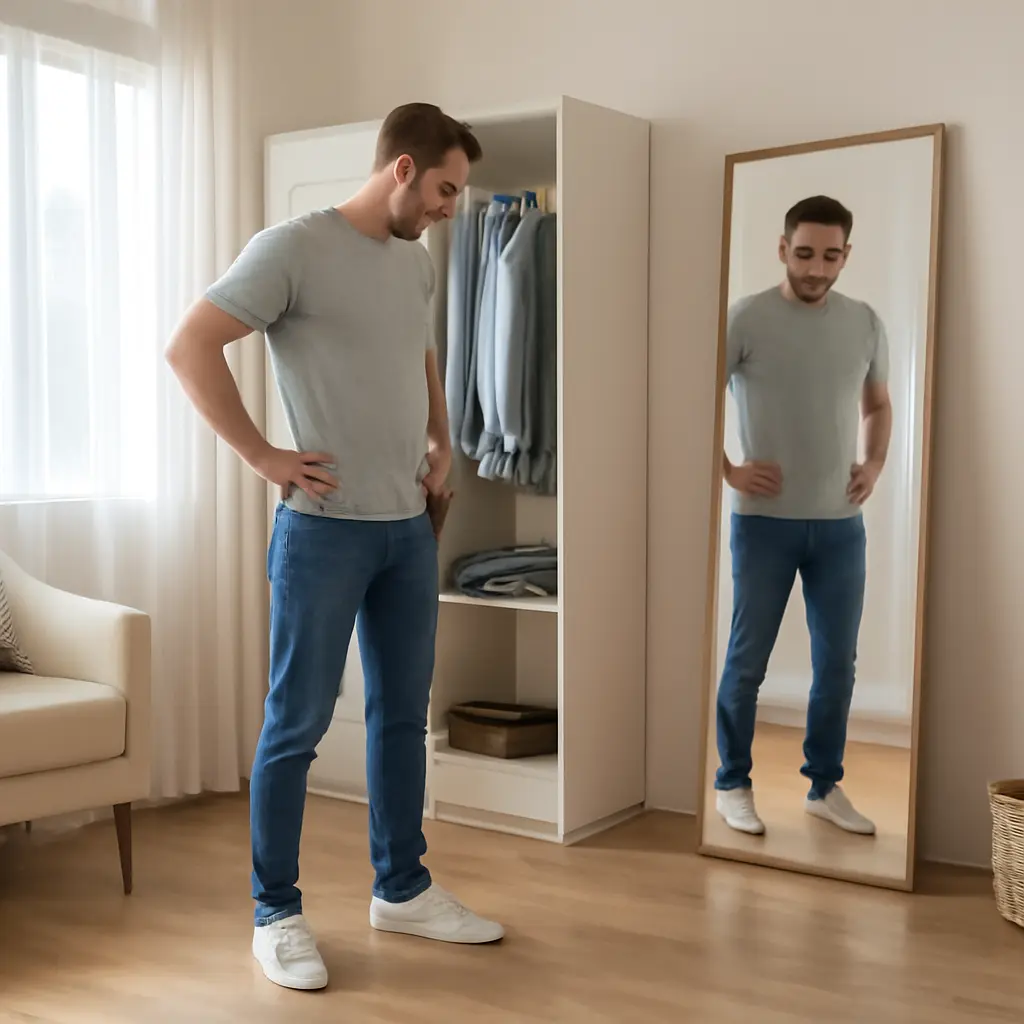
Plain outfits are simple combinations of familiar clothes—such as a T-shirt, jeans, and sneakers—without prominent patterns or embellishment. The biggest mistake guys make with them is assuming that “plain” means every choice can be made on autopilot: a basic outfit still depends on fit, proportion, condition, and coordination. That matters because clothes are a visible part of first impressions; a 2019 study published in Nature Human Behaviour found that people made judgments about trustworthiness from clothing in milliseconds, even when the clothes were subtly varied. The practical fix is not to buy more statement pieces, but to make the basics look intentional.
Plain Outfits Depend on Fit and Intentionality
A plain outfit is an ensemble built mainly from solid colors and uncomplicated designs. It is not the same as an outfit with no style: because there are few patterns or details to draw attention, the cut, proportions, fabric, and condition of each garment become more noticeable. In other words, simplicity makes execution matter more.
The mistake is treating basics as interchangeable and overlooking how they sit on the body. A T-shirt that pulls across the chest, jeans that bunch heavily at the ankles, or sneakers that look worn out can make an otherwise sensible combination appear careless. The goal is not to wear tight clothes or chase a single ideal silhouette; it is to choose pieces that fit comfortably and work together.
Fit: the first thing to check
Fit describes how a garment’s dimensions and shape relate to the wearer. On a T-shirt, check that the shoulder seam sits near the shoulder edge, the sleeves do not squeeze the arm, and the hem falls to a useful length. On trousers, check the rise, seat, thigh, and hem. A tailor can often adjust hems and waistbands, while overly short or narrow garments may be harder to correct.
A useful test is to move naturally: sit, raise your arms, and walk. Clothes should not restrict movement, but they should also avoid excess fabric that collapses into distracting folds. The best fit is the one that suits both your body and the setting.
Proportion: making simple pieces work together
Proportion is the visual relationship between garments, including their lengths, widths, and volumes. If both the top and trousers are very oversized, the outfit can lose definition; if both are extremely slim, it can feel restrictive or dated. Try balancing volume: a relaxed shirt with straighter trousers, or a closer-fitting top with roomier pants.
The same principle applies to hems and layers. A shirt that extends far below a jacket can look accidental, while a neatly proportioned overshirt or jacket adds structure. These adjustments are subtle, but in a plain outfit they have nowhere to hide.
Plain Outfits Need Coordination, Not More Decoration
Once fit and proportion are under control, coordination makes the outfit feel deliberate. Coordination means choosing colors, textures, and levels of formality that make sense together. It does not require matching every item or adding conspicuous accessories.
Color: build a small, coherent palette
A color palette is the set of hues used across an outfit. Neutral colors such as navy, gray, white, olive, brown, and black are easy to combine, but wearing neutrals does not automatically guarantee harmony. Consider contrast: a light shirt with dark trousers creates clear separation, while closely related shades create a quieter effect.
For a reliable starting point, use two or three main colors and repeat one color in a small detail, such as shoes, a belt, or a jacket. Avoid forcing an exact match between items that are different shades or materials. A clean contrast usually looks more intentional than an almost-match.
Texture: add depth without loud patterns
Texture is the visible or tactile character of a fabric, such as the smoothness of a cotton jersey, the grain of denim, or the nap of wool. Combining different textures gives a simple outfit visual interest without relying on large logos or bold prints. For example, a smooth T-shirt, textured overshirt, and sturdy denim create distinction while staying understated.
Fabric weight also affects how a garment hangs. A heavier T-shirt may hold its shape better under a jacket, while a lightweight shirt can work well in warm weather or as a layer. Choose materials for the season and occasion rather than assuming that all basic pieces behave alike.
Formality: match the pieces to the occasion
Formality is the degree to which clothing suits a casual, smart-casual, or professional setting. A plain outfit can still feel mismatched if its components sit at different levels: athletic running shoes, distressed jeans, and a crisp dress shirt may each be useful, but together they can send conflicting signals.
For everyday casual wear, clean sneakers and well-fitting jeans are an easy pairing. For a smarter setting, swap in a structured overshirt or unstructured blazer and cleaner leather shoes. The point is not to dress formally all the time; it is to make the outfit appropriate to where you are going.
Plain Outfits Look Better When Basics Are Maintained
A well-chosen outfit can still appear unfinished when its garments are faded, wrinkled, stained, or misshapen. Maintenance is part of styling because plain clothes expose wear more clearly than busy prints do. Before leaving, check the collar, cuffs, hems, shoes, and visible seams.
Condition and care
Condition refers to the cleanliness and structural state of clothing. Follow garment care labels, remove lint, and repair loose buttons or small seams before they become more noticeable. Wash items at suitable temperatures and avoid over-drying when it can shrink or damage fabric.
Shoes deserve the same attention as clothing. Wiping away dirt, replacing worn laces, and keeping leather conditioned can make a basic combination look more considered. A simple outfit does not need expensive pieces, but it benefits from pieces that are clean and in usable shape.
A practical plain-outfit checklist
- Check that the shoulder seams, sleeves, waist, and hems sit comfortably.
- Balance the volume of the top and trousers rather than making every piece oversized or tight.
- Keep the main colors coherent and use contrast intentionally.
- Use differences in fabric texture for interest instead of relying on extra logos.
- Match shoes and outerwear to the occasion and the rest of the outfit.
- Remove lint, address wrinkles, and check that shoes and garments are clean.
Conclusion: Make Plain Outfits Look Deliberate
The biggest mistake with plain outfits is treating simplicity as an excuse to ignore the details. Fit and proportion establish the foundation; color, texture, and formality create coordination; and basic care keeps the result looking finished. Start with clothes that fit comfortably, make one or two purposeful choices about contrast or texture, and check that everything suits the occasion. You do not need a bigger wardrobe—just a more deliberate approach to the pieces you already wear.
Sources: Adam, Hajo and Adam D. Galinsky, “Enclothed cognition,” Journal of Experimental Social Psychology, 2012, https://doi.org/10.1016/j.jesp.2012.02.008; Olivola, Christopher Y., et al., “The visual appearance of a face or clothing can influence judgments of trustworthiness,” Nature Human Behaviour, 2019, https://doi.org/10.1038/s41562-019-0782-4; University of Leeds, “First impressions: It takes just 100 milliseconds to judge a stranger,” 2006, https://www.leeds.ac.uk/news/article/158/first_impressions_it_takes_just_100_milliseconds_to_judge_a_stranger.