
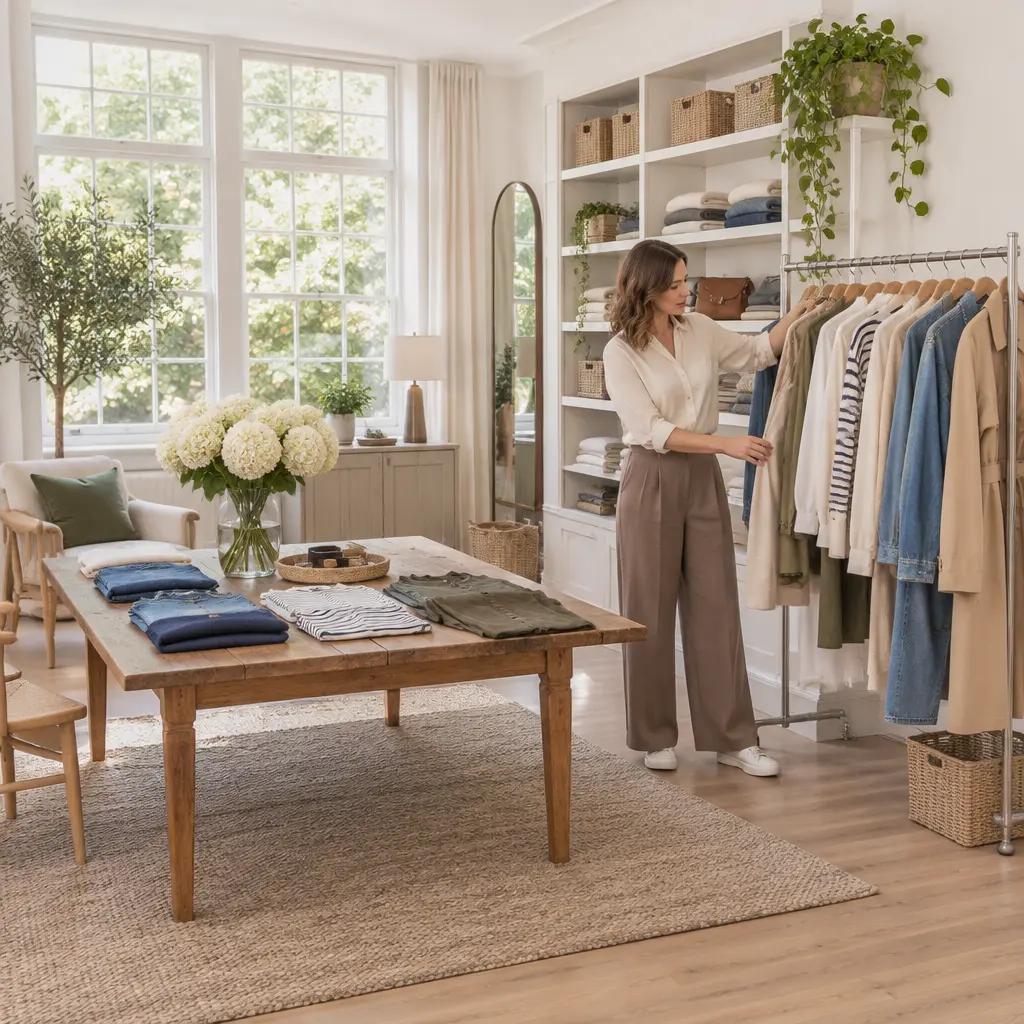
Personal style in women’s fashion is the individual way someone chooses and combines clothing, shoes, and accessories to express their tastes and meet the needs of daily life. Finding yours is less about following every trend than identifying what feels authentic, fits well, and works for your routine. A practical approach is to notice what you already wear, define the qualities you want your clothes to convey, experiment with silhouettes and colors, and build a versatile wardrobe around the results. This matters in a fashion market shaped by fast-changing trends: the U.S. Environmental Protection Agency estimates that 11.3 million tons of textiles entered U.S. municipal solid waste in 2018, making thoughtful purchasing and longer use relevant beyond personal appearance.
Finding personal style through wardrobe choices
Personal style is a pattern of choices, not a fixed category or a prescribed uniform. Fashion theorist Joanne Entwistle describes dress in The Fashioned Body as a situated bodily practice: clothing is shaped by the body, social context, and everyday activity. Applied to personal style, that means a useful wardrobe must reflect both self-expression and real circumstances—such as work, climate, mobility, budget, and comfort.
Style can be described through related categories, including aesthetic preferences, fit and silhouette, color choices, lifestyle needs, and shopping habits. These categories overlap. A preference for tailored clothes, for example, may reflect a love of clean lines, a professional dress code, or both. The goal is not to choose a label once and for all, but to notice which combinations consistently feel and function well.
Aesthetic preferences and style references
An aesthetic is a recognizable set of visual qualities, such as relaxed, romantic, minimal, sporty, tailored, or eclectic. These terms are useful as starting points, not rules. Collect outfit references from magazines, films, street photography, or people whose looks appeal to you, then look for repeated details: proportion, texture, color, degree of polish, and accessories.
A practical exercise is to save 10 to 20 looks and identify three recurring qualities in them. You might notice that you prefer soft fabrics, defined waists, and neutral colors, or oversized shapes, bright accents, and sneakers. This method turns a vague impression into observations you can test against your own closet and lifestyle.
Fit, silhouette, and comfort
Fit describes how a garment sits on the body; silhouette is the overall outline created by clothing. Both affect how an outfit looks and feels, and neither requires dressing for an idealized body type. Compare pieces you enjoy wearing with those you avoid: notice where waistlines sit, how much ease you like, preferred lengths, and whether you feel more at home in structured or fluid shapes.
Comfort is part of style rather than a compromise with it. The Centers for Disease Control and Prevention advises adults to get at least 150 minutes of moderate-intensity physical activity each week, a reminder that many people need clothes that accommodate movement as well as work and social plans. Choose pieces that suit the activity, temperature, and time you will spend wearing them; a stylish outfit that restricts movement may not serve your actual day.
Color, texture, and outfit details
Color preferences can help make a wardrobe feel cohesive, but there is no need to follow a rigid seasonal color system. Start with colors you enjoy wearing and notice which combinations make getting dressed easier. A small group of preferred neutrals can work as a base, while a few favorite colors, patterns, or textures add personality.
Texture and finishing details also distinguish one person’s version of a look from another’s. Denim with a crisp shirt and loafers reads differently from denim with a soft knit and running shoes. Jewelry, bags, belts, and footwear can provide a low-cost way to test a new direction before replacing larger parts of a wardrobe.
Building a personal-style wardrobe from everyday evidence
Once you have identified likely preferences, use your existing clothes as evidence. The most reliable style clues are often the pieces you reach for repeatedly, not the items bought for an imagined lifestyle. A short wardrobe review can reveal which colors, proportions, fabrics, and outfit formulas already work, and where practical gaps remain.
Audit what you own and wear
A wardrobe audit is a review of clothing based on use, fit, condition, and personal appeal. Sort items into pieces you wear often, pieces you like but rarely wear, and pieces that no longer suit your needs. For rarely worn items, record the reason: poor fit, uncomfortable fabric, difficulty matching, unsuitable occasion, or a change in taste. That information is more useful than simply counting what you own.
A simple outfit log can help. For two weeks, photograph or note outfits that feel good and those that do not. Look for patterns in weather, occasion, comfort, and combinations. The result is a practical record of your real preferences rather than a set of abstract fashion rules.
Define wardrobe needs by lifestyle
A lifestyle wardrobe is a collection planned around the activities and settings that make up a person’s week. Estimate how often you need clothes for work or study, home, travel, exercise, formal events, and social occasions. Give more attention to the categories you actually use; a closet full of occasionwear is not helpful if most days call for comfortable, washable layers.
For example, someone who commutes on foot in a rainy climate may prioritize weather-resistant outerwear and comfortable shoes, while someone working from home may value adaptable layers for video calls and errands. These are not competing definitions of good style. They show why personal style should be judged against the wearer’s context.
Shop deliberately and consider longevity
Deliberate shopping means buying with a specific wardrobe need and likely outfit combinations in mind. Before purchasing, consider whether the item fits comfortably, works with several pieces you own, suits your routine, and can be cared for within your budget and time. A 24-hour pause can help separate a genuine need or lasting preference from the urgency of a sale or trend.
The environmental case for considered use is substantial. The U.S. Environmental Protection Agency reports that 17 million tons of textiles were generated in the United States in 2018, of which 11.3 million tons were landfilled. Those figures cover textiles broadly, not only women’s clothing, but they underline the value of wearing, repairing, reusing, and donating garments when appropriate. A wardrobe can evolve through tailoring, secondhand finds, and outfit recombination instead of constant replacement.
Testing and refining your personal style
Personal style develops through trial, observation, and adjustment. A trend can be useful as an experiment, but it does not need to become part of your identity. Test new ideas in small ways, evaluate how they feel in actual settings, and keep the details that work. This approach makes style flexible enough to change with age, work, interests, and circumstance.
Create outfit formulas
An outfit formula is a repeatable combination of garment types that reduces decision-making while leaving room for variation. Examples include straight-leg trousers, a knit top, and a jacket; a dress with a cardigan and practical shoes; or jeans, a button-down shirt, and a coat. The formula is a starting structure, not a uniform: changing color, accessories, fabric, or proportions can make it feel personal.
Notice which combinations work across several settings. A jacket that layers over work clothes and casual outfits, for instance, may be more useful than a statement piece that is difficult to style. A small visual wardrobe map can help show which items combine easily and where one versatile piece could fill a real gap.
Experiment with trends without losing your point of view
A trend is a fashion direction that gains attention for a period; personal style is the wearer’s ongoing selection of what to adopt, adapt, or ignore. Try a trend through an accessory, color, or secondhand item before investing in a full look. Then ask whether it fits your preferred silhouettes, existing wardrobe, and daily activities.
This is particularly helpful when online imagery presents a narrow or highly styled version of a look. A trend may appear appealing in a photograph but feel impractical in your climate, budget, or routine. Keeping your own comfort and preferences as the test allows you to participate selectively rather than shop reactively.
Adapt style as needs change
Personal style is not a permanent result; it is a set of choices that can change as life changes. A new job, mobility needs, pregnancy, a move to a different climate, or a shift in budget may alter what clothing needs to do. Revisit your wardrobe periodically and adjust the balance of comfort, function, expression, and occasionwear accordingly.
A useful example is someone moving from a mostly remote job to a role with regular in-person meetings. Rather than buying a new wardrobe at once, they could identify the existing pieces that already feel polished, add a few compatible layers or shoes, and test the combinations over several weeks. Small, informed adjustments reduce waste and make the transition easier.
Conclusion: Make personal style practical, expressive, and adaptable
Finding personal style begins with noticing what you like and wear, then connecting those preferences to fit, color, comfort, and lifestyle. A wardrobe audit and outfit log reveal useful patterns; deliberate shopping, outfit formulas, and small experiments turn those patterns into a workable wardrobe. Because clothing preferences and daily needs change, style is best treated as an evolving practice rather than a fixed label.
Start this week by recording a few outfits you feel good in and identifying what they have in common. Use that evidence to plan one useful combination or wardrobe adjustment, and give yourself time to see whether it works. For further reading, explore Joanne Entwistle’s work on dress and everyday life, along with the U.S. Environmental Protection Agency’s information on textile waste.
Sources: Joanne Entwistle, The Fashioned Body: Fashion, Dress and Social Theory, 2nd edition, Polity Press, 2015, https://politybooks.com/bookdetail/?isbn=9780745638794; Centers for Disease Control and Prevention, “Adult Activity: An Overview,” https://www.cdc.gov/physical-activity-basics/guidelines/adults.html; U.S. Environmental Protection Agency, “Textiles: Material-Specific Data,” https://www.epa.gov/facts-and-figures-about-materials-waste-and-recycling/textiles-material-specific-data.