
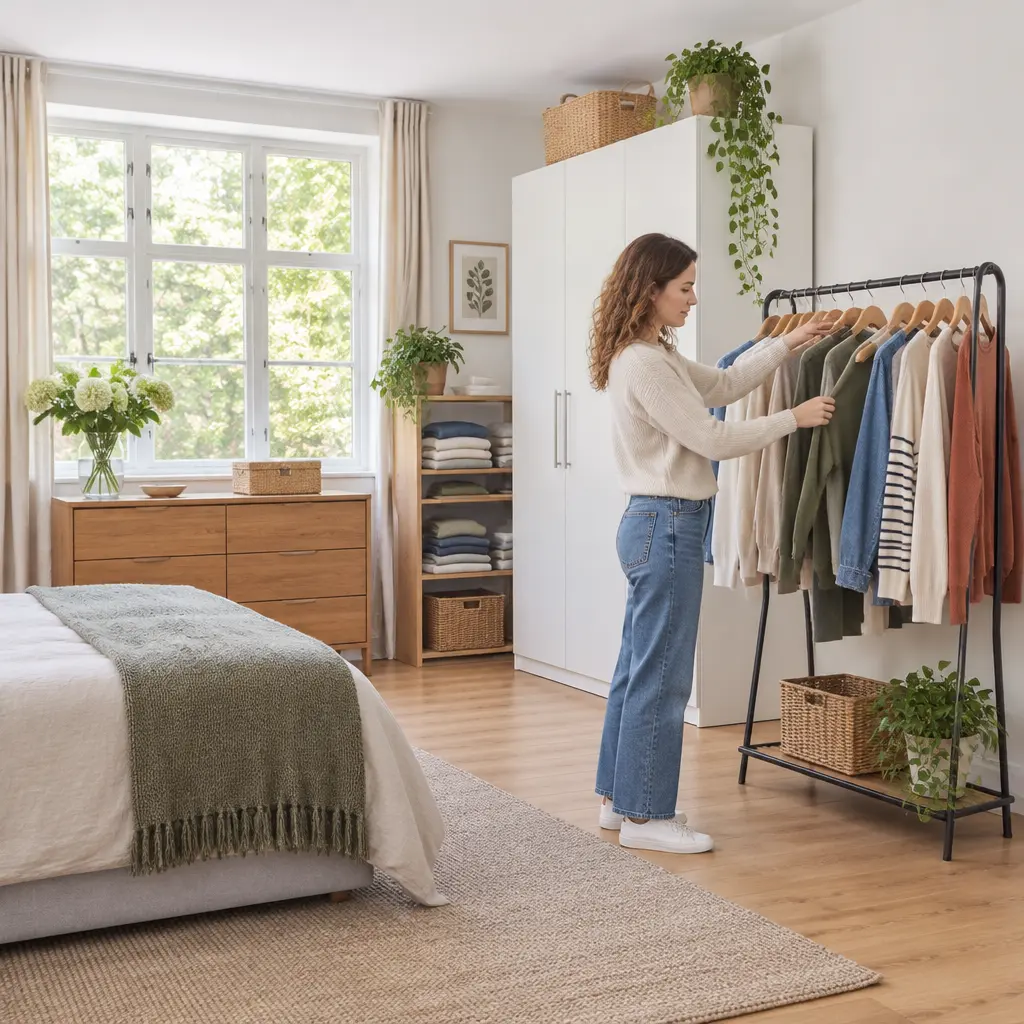
A woman does not need a fixed number of clothes; she needs enough well-fitting, useful pieces for her climate, daily activities, laundry routine, and personal style. For many people, a practical wardrobe might contain roughly 30–50 everyday garments, excluding underwear, sleepwear, and specialty clothing—but that is a planning range, not a universal rule. The right number becomes clearer by separating wardrobe essentials from work, seasonal, and occasion-specific clothes, then checking what is actually worn. This matters beyond closet space: the United Nations Environment Programme estimates that the fashion industry produces 2–8% of global greenhouse-gas emissions, while the European Environment Agency reports that textile consumption in the EU averaged 19 kilograms per person in 2022.
Wardrobe size: How many clothes a woman needs
A wardrobe is the collection of clothing a person owns and uses. There is no research-backed ideal count for women, because needs differ by occupation, climate, culture, body changes, budget, and access to laundry. A useful wardrobe is therefore best defined by function: it supplies enough clean, appropriate outfits for the time between laundry days, accommodates the activities a person actually does, and avoids a large surplus of rarely worn items.
A practical starting estimate for a mostly casual lifestyle is 30–50 everyday garments, not counting underwear, socks, sleepwear, outerwear, activewear, uniforms, or formalwear. Someone who wears a uniform or works from home may need fewer distinct pieces; someone with several professional dress codes or pronounced seasons may need more. The number is a starting point to test against real use—not a target to buy toward.
A functional wardrobe is measured by outfit coverage
Outfit coverage means having enough clean combinations for a person’s routine. One simple estimate is: garments needed in a category = uses between laundry days × wears per use, with a small buffer for delays or unexpected plans. For example, a person who wears a fresh work top five days a week and does laundry weekly may want at least five tops, plus a spare if laundry timing is uncertain. Rewearing trousers or jackets can reduce the total.
This approach is more reliable than copying a capsule-wardrobe list. A 2024 YouGov survey of U.S. adults found that 31% said they wore only a small portion of their clothes regularly, illustrating why possession counts alone do not describe whether a wardrobe works. The practical question is not simply “How many pieces?” but “Can these pieces meet my usual needs without unnecessary repetition or stress?”
An illustrative everyday count
For someone with a casual routine, regular laundry, and moderate seasonal variation, an initial inventory might include 7–10 tops, 4–6 bottoms, 2–4 dresses or one-piece outfits, 3–5 layering pieces, and 2–4 pairs of everyday shoes. These categories overlap in use: dresses may replace tops and bottoms, while a cardigan or jacket can extend the range of an outfit. The figures are a planning example, not a prescription.
A useful visual is a weekly outfit grid: list seven days across the top and activities down the side, then assign existing clothes to each occasion. Blank spaces reveal genuine gaps; repeated outfits reveal which pieces earn their place. The grid can also distinguish true shortages from the feeling that more choice is always needed.
Clothing categories: How wardrobe needs vary by use
Clothing categories are groups of garments organized by purpose, such as everyday wear, workwear, exercise clothing, outerwear, and formalwear. Sorting by use helps prevent double-counting and clarifies which items need to be accessible year-round. A person who cycles to work, for example, may need weatherproof layers and spare exercise clothing that another person does not.
Everyday and work clothes
Everyday clothes cover the activities that fill most weeks: errands, home life, social plans, and commuting. Work clothes depend on dress code and whether garments can be worn in multiple settings. Someone with a uniform may need only enough uniform sets to bridge laundry days, whereas a client-facing role may require several distinct outfits. Build the count from the calendar and laundry cycle rather than assuming that every weekday requires a completely different look.
The U.S. Bureau of Labor Statistics’ American Time Use Survey documents how time is distributed among paid work, household activities, and leisure. Those patterns differ across individuals, so a wardrobe should reflect the wearer’s own week. Clothes that suit the actual balance of work, caregiving, commuting, and recreation are more useful than a generic list of “must-haves.”
Seasonal and climate-specific clothes
Seasonal clothing includes garments needed for heat, cold, rain, or snow that may be stored when the weather changes. People in climates with large temperature swings often need more layers and outerwear than people in mild climates. Layering can reduce duplication: a base layer, mid-layer, and weatherproof shell may work across several conditions, while a single heavy coat may be practical in a colder region.
Count seasonal items separately from the clothes worn every week. Keep only what fits, functions, and is likely to be used when the season returns. Climate adaptation is especially relevant as weather patterns change; the World Meteorological Organization reports that 2024 was the warmest year in the observational record, although local seasonal needs still vary considerably.
Exercise, occasion, and specialty clothing
Specialty clothing serves less frequent or narrowly defined activities, including exercise, ceremonies, travel, protective work, and formal events. These items can make a wardrobe appear large even when everyday clothing is modest. Estimate them from how often the activity occurs and whether items can serve more than one purpose. A person who exercises several times weekly may need multiple moisture-managing outfits; someone attending one formal event a year may be better served by renting, borrowing, or rewearing a versatile outfit.
Include practical necessities, such as comfortable shoes, weather protection, or clothing required for religious or cultural practice. The goal is not to minimize every category equally, but to avoid buying for hypothetical occasions while ensuring that meaningful, recurring activities are covered.
Wardrobe planning: How to choose a sustainable number
Wardrobe planning is the process of comparing owned clothing with actual needs, then maintaining or adjusting the collection deliberately. It connects the question of quantity to cost, garment lifespan, fit, and environmental impact. A smaller wardrobe is not automatically better if it forces frequent replacement; a larger one is not automatically wasteful if garments are used, cared for, and retained over time.
Audit what is already owned
A wardrobe audit records what a person owns, whether each item fits and works, and how often it is worn. Group garments by category and season, then note items that are uncomfortable, damaged, difficult to coordinate, or repeatedly chosen. A short wear log over four to eight weeks can reveal patterns more accurately than memory alone. Do not discard useful clothes solely to reach a smaller number; repair, alter, donate, resell, or recycle them according to condition and local options.
The Ellen MacArthur Foundation has highlighted that clothing utilization has declined globally compared with earlier decades, while clothing production has increased. That finding supports a practical priority: improve the use and lifespan of suitable garments before adding more. Care labels, timely repairs, and appropriate storage can help keep clothes wearable longer.
Buy to fill a demonstrated gap
A wardrobe gap is a recurring need that existing clothes cannot meet—for example, no comfortable shoes for daily walking or no warm layer for a regular commute. Before purchasing, identify the activity, the required features, and at least two or three ways the item will work with clothes already owned. This reduces impulse purchases that do not integrate into everyday outfits.
Environmental data reinforce the value of thoughtful purchasing. The European Environment Agency estimates that textile consumption in the EU averaged 19 kilograms per person in 2022, including clothing and other textiles. The figure is a consumption measure, not a recommended wardrobe size, but it underscores the material flow associated with buying and replacing textiles. Buying fewer, more useful garments can be one part of reducing that flow.
Reassess as life changes
The right wardrobe count changes with pregnancy, body changes, disability, job transitions, relocation, caregiving, retirement, and shifts in climate or activity. Reassess at the beginning of a new season or after a major routine change. Keep accessible the clothes that fit the present life, rather than treating a former size or lifestyle as the standard the wardrobe must preserve.
A flexible wardrobe may include a small core of dependable pieces, a limited set of season-specific items, and a few garments for less frequent occasions. This structure allows practical adjustment without requiring a strict capsule formula or a fixed lifetime number.
Conclusion: A useful wardrobe is personal, not numerical
How many clothes a woman really needs depends on outfit coverage, laundry frequency, climate, work, hobbies, and personal preferences. A 30–50-piece everyday wardrobe can be a reasonable starting estimate for some casual lifestyles, but it excludes several categories and should never be treated as a rule. Sorting clothes by use, checking a weekly outfit grid, and auditing actual wear reveal a more meaningful number.
The broader case for thoughtful wardrobe planning is both practical and environmental: it can make getting dressed easier, reduce unused purchases, and encourage longer garment use. Start with what you own, identify genuine gaps, and choose clothing that serves your real routine. For further context, consult the European Environment Agency’s textile-consumption reporting and the Ellen MacArthur Foundation’s work on circular fashion.
Sources: YouGov, “How many of your clothes do you actually wear?”, 2024, https://today.yougov.com/consumer/articles/50684-how-many-of-your-clothes-do-you-actually-wear; U.S. Bureau of Labor Statistics, American Time Use Survey, https://www.bls.gov/tus/; World Meteorological Organization, State of the Global Climate 2024, https://wmo.int/publication-series/state-of-global-climate-2024; United Nations Environment Programme, “Fashion’s tiny hidden secret,” https://www.unep.org/news-and-stories/story/fashions-tiny-hidden-secret; European Environment Agency, “The destruction and waste of textiles in Europe,” https://www.eea.europa.eu/publications/management-of-used-and-waste-textiles; Ellen MacArthur Foundation, A New Textiles Economy: Redesigning Fashion’s Future, https://www.ellenmacarthurfoundation.org/a-new-textiles-economy.