
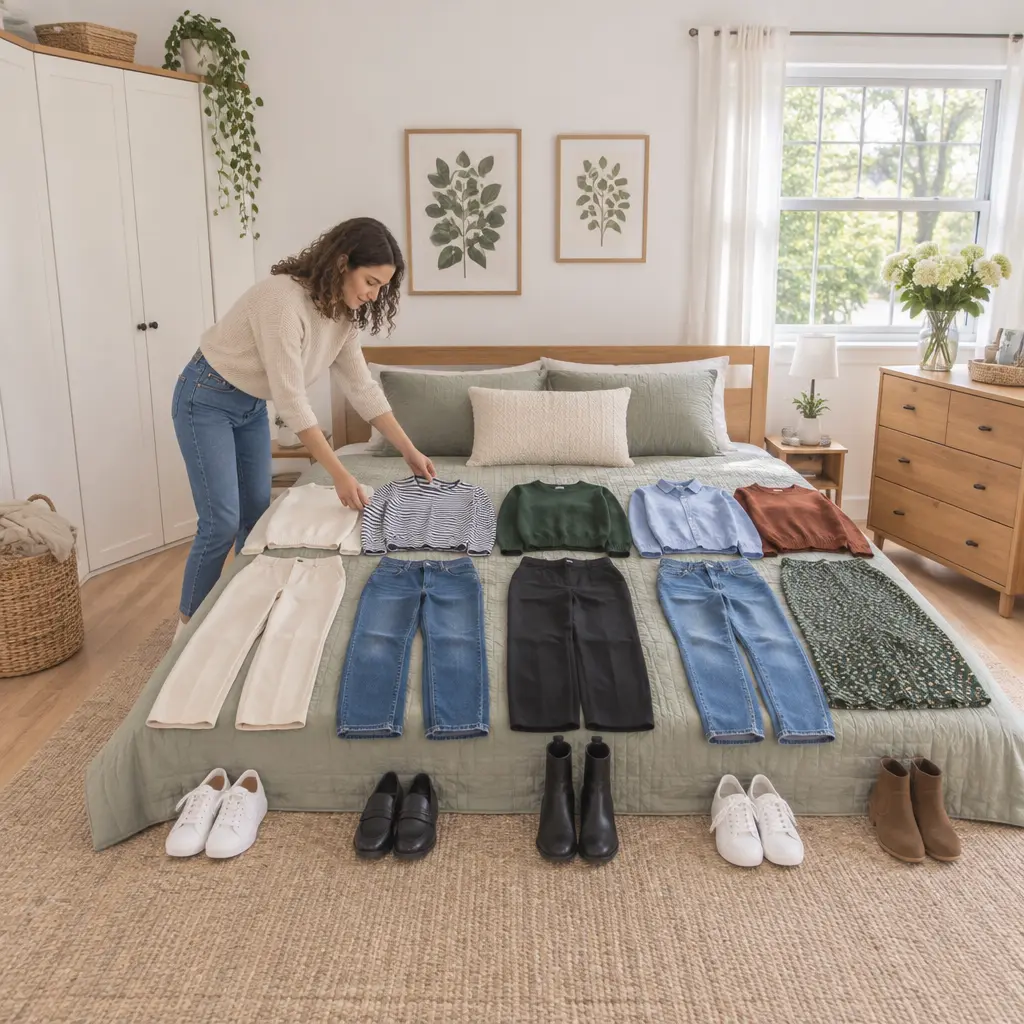
Planning outfits for the week means choosing clothes in advance to suit your schedule, the weather, and your comfort needs. A simple weekly plan can reduce rushed morning decisions, help you make better use of what you already own, and make it easier to spot laundry or wardrobe gaps before they become problems. The U.S. Environmental Protection Agency estimates that Americans generated 17 million tons of textile waste in 2018, a reminder that thoughtful clothing use matters as well as convenience. A practical routine is to check your calendar and forecast, build outfits around repeatable combinations, prepare them for changing conditions, and review what worked at week’s end.
Weekly Outfit Planning: Definition and Benefits
Weekly outfit planning is the process of selecting and preparing clothing combinations for the days ahead. It is a form of wardrobe management: rather than choosing each item in isolation, you match clothes to planned activities, likely conditions, and your own preferences. There is no universally prescribed number of outfits or proven time-saving figure; the useful measure is whether the routine makes mornings easier without adding unnecessary work.
The idea connects several related practices: calendar-based dressing, weather-aware layering, capsule-style coordination, and clothing care. Together, they help turn a wardrobe into a set of workable options rather than a collection of items that are difficult to combine.
Plan around your calendar
Calendar-based outfit planning means assigning clothing to the demands of each day. Note work requirements, meetings, travel, exercise, social plans, and time spent at home. If a day includes both commuting and an evening event, choose an outfit that can adapt with a change of shoes or an added layer. The Bureau of Labor Statistics’ American Time Use Survey tracks how people allocate their time across activities, underscoring why clothing needs vary with daily routines rather than following one standard template.
Use weather as a planning input
Weather-aware planning matches fabrics and layers to expected temperature, precipitation, and wind. Check a reliable local forecast for each day, then prepare a backup for conditions that could change. A lightweight outer layer, umbrella, or warmer mid-layer can make an outfit more flexible. Forecasts are estimates, so planning for a range of conditions is more dependable than choosing clothes based on a single temperature reading.
Coordinate a small set of versatile pieces
A capsule-style approach uses a limited group of compatible garments to create multiple combinations. Choose a few colors that work together, then add pieces suited to the week’s activities. This does not require a particular wardrobe size or buying new clothes. The EPA’s textile-waste figures provide broader context for making existing garments work harder, though they do not prove that outfit planning alone reduces waste.
Weekly Outfit Planning: A Practical Process
Once the planning principles are clear, a short weekly routine can put them into practice. Pick a consistent time—such as Sunday evening or the start of a workweek—and use the same sequence each time.
1. Review commitments and dress requirements
Look over the week’s calendar and label days by their main needs: formal, casual, active, travel-heavy, or mostly at home. Check whether any workplace, school, or event dress codes apply. Set aside clothing for demanding days first; flexible outfits can fill less structured days.
2. Check the forecast and choose layers
Compare the forecast with your plans, especially for outdoor commutes or events. Select a base outfit and identify a layer or alternative for rain, cold, heat, or temperature changes between indoors and outdoors. If the forecast is uncertain, keep a backup garment accessible rather than planning a completely separate outfit.
3. Build complete outfits, not just clothing piles
Pair the main garments with shoes, outerwear, and accessories you are likely to need. Try combinations on if fit, comfort, or formality is uncertain. A complete outfit is easier to use than a shirt chosen without considering trousers, footwear, or the day’s practical demands.
4. Check cleanliness, fit, and comfort
Before setting an outfit aside, confirm that each item is clean, in good repair, and comfortable for the expected activity. Identify pieces that need washing, ironing, mending, or replacement, and handle them early enough to avoid a last-minute scramble. Follow garment-care labels; washing needs differ by fabric and use.
5. Prepare and review
Hang or group each day’s outfit where it is easy to find, while keeping delicate or special-care items stored appropriately. At the end of the week, note what felt comfortable, what went unworn, and what you wished you had available. This quick review helps make the next plan more accurate and reduces repeated mistakes.
Weekly Outfit Planning: Examples and Adjustments
The best plan depends on lifestyle, dress expectations, climate, and personal comfort. These examples show how the same planning method can support different kinds of weeks.
A hybrid-work week
For office days, prepare outfits that meet the workplace’s expectations and suit the commute. For home days, choose comfortable clothes that still work for scheduled video calls. Keep a jacket or presentable top nearby if a meeting may require a more polished appearance. Reusing compatible trousers, knitwear, or shoes can create variety without requiring a separate outfit for every day.
A week with exercise and errands
Set aside activity clothing according to the actual exercise schedule, and plan separate everyday clothes if you will change afterward. Check that footwear and weather protection suit the activity. If clothes will be worn more than once, account for comfort, hygiene, and care instructions rather than assuming every item can be reused.
A variable-weather week
When conditions may shift, build outfits around adaptable layers and shoes suitable for the forecast. Keep a practical alternative ready for a rainy commute or unexpectedly cool day. For travel, consider how easily garments can be mixed and matched and whether they meet the trip’s dress requirements.
Conclusion: Make the Plan Useful, Not Complicated
Weekly outfit planning works best as a flexible routine: review the calendar, check the forecast, coordinate versatile pieces, prepare complete combinations, and resolve care needs in advance. These steps can ease morning decisions and encourage more intentional use of clothes, while the EPA’s textile-waste data offers a wider reason to value garments already in your wardrobe. Start by planning the next few days, observe what works, and adjust the routine to fit your schedule and comfort.
Sources: U.S. Environmental Protection Agency, Textiles: Material-Specific Data, https://www.epa.gov/facts-and-figures-about-materials-waste-and-recycling/textiles-material-specific-data; U.S. Bureau of Labor Statistics, American Time Use Survey, https://www.bls.gov/tus/