
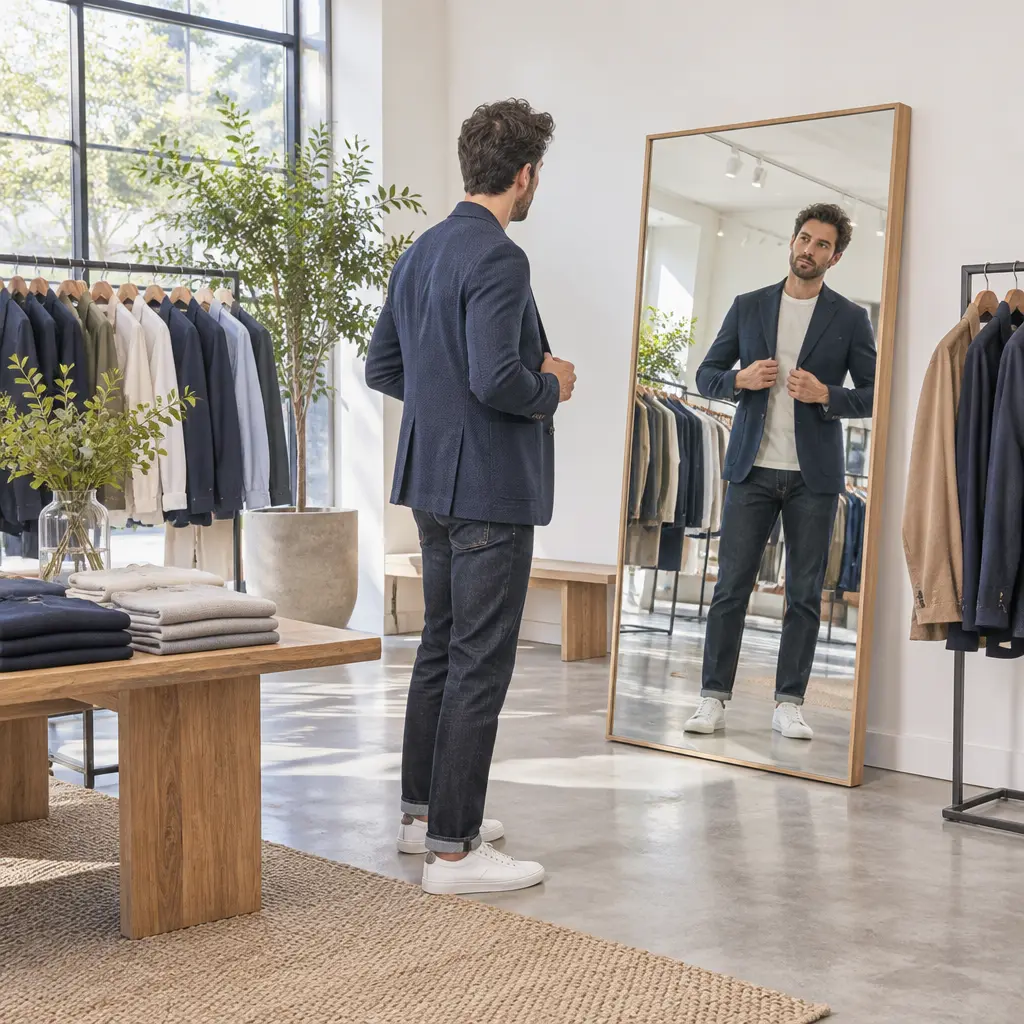
A blazer looks relaxed rather than overdressed when its structure, fabric, and styling suit the occasion. The practical formula is to choose a less formal blazer—often unlined or textured—then pair it with casual pieces such as a T-shirt, jeans, chinos, or sneakers. Fit still matters: a blazer should sit comfortably at the shoulders and allow easy movement, without looking like a formal suit jacket worn out of context. Below, we’ll cover how to choose the right blazer, balance its formality, adapt it to different settings, and avoid common styling mistakes.
Blazer formality and outfit balance
A blazer is a tailored jacket designed to be worn as a separate garment, rather than as the matching half of a suit. That distinction matters: a standalone blazer usually offers more freedom in fabric, color, and styling than a suit jacket. The British tailoring house Gieves & Hawkes describes the blazer as a versatile tailored jacket that can be styled for both smart and casual occasions. In everyday terms, the goal is not to make every part of an outfit equally polished; it is to balance the blazer’s structure with more relaxed pieces.
There is no universal statistic that determines whether an outfit looks overdressed. The answer depends on the event, workplace expectations, climate, and local dress norms. Think of formality as a spectrum: a dark, smooth, structured blazer with dress trousers sits near the formal end, while a soft cotton or textured blazer with denim sits closer to smart casual. Moving one or two elements down that spectrum is often enough to make a blazer feel natural.
Choose a casual blazer, not a suit jacket
A casual blazer is typically less rigid and less glossy than a jacket intended to complete a suit. Look for cotton, linen, wool blends, corduroy, or visible textures such as hopsack. Unlined or partially lined construction can also make a jacket feel lighter and less formal. A shiny, highly structured jacket may read as businesswear even when paired with jeans; texture and softness help signal that the blazer is meant to stand alone.
The distinction is useful, but not absolute: many suit jackets can be worn separately if their pattern, fabric, and cut work with the rest of the outfit. If the jacket has matching trousers, a very smooth finish, or formal details, it may be harder to dress down convincingly.
Use contrast to set the level of formality
Outfit balance comes from contrast. Pair a structured top layer with a relaxed shirt, denim, chinos, or understated trainers. Conversely, if the blazer is soft and casual, a crisp shirt and leather shoes can make the whole outfit look more polished. Avoid making every item compete for attention: a bold blazer works best with simple supporting pieces, while a neutral blazer can anchor a patterned shirt or colorful accessories.
A useful test is to ask whether the outfit contains at least one clearly casual element and whether that element suits the occasion. For a casual dinner, that might be a plain T-shirt and clean sneakers; for a relaxed office, it could be chinos and a knit polo.
Blazer fit and proportion
Fit determines whether a blazer looks intentional or borrowed from a more formal setting. The jacket should follow the body without pulling across the chest or hanging excessively loose. The most important first check is the shoulder: the seam should sit close to the natural edge of the shoulder, without a pronounced divot or an overhanging ridge. A good fit makes even casual combinations look considered, while an ill-fitting blazer can undermine the whole outfit.
Check the shoulders, chest, and sleeves
Button the blazer while standing naturally. The front should close without an X-shaped strain around the button, and the lapels should lie reasonably flat. You should be able to reach forward and sit comfortably. Sleeve length is a matter of proportion and preference, but the cuff should not swallow the hand; with a shirt underneath, a small amount of shirt cuff can show.
A casual blazer can have a little more ease than a sharply tailored business jacket, especially when worn over a sweater. Ease is not the same as excessive size: dropped shoulders, sleeves covering the knuckles, or a torso that billows can make the jacket look poorly fitted rather than relaxed.
Match jacket length to the outfit
A blazer that ends around the seat generally works across a wide range of outfits. Shorter cuts can feel modern and casual, while longer traditional cuts may appear more formal. Consider the rise and shape of your trousers as well: a shorter jacket often pairs naturally with tapered jeans or chinos, while a classic-length blazer can balance straighter-leg pants.
Proportion matters more than chasing a specific trend. Try the complete outfit in a mirror, including footwear, and check that the jacket does not visually overwhelm the trousers or make the torso appear unusually long or short.
Blazer pairings for everyday settings
Once the blazer’s formality and fit are right, the supporting clothes determine how dressed up the outfit feels. These combinations are practical starting points rather than strict rules. Adjust them to the venue: a relaxed workplace, a weekend lunch, and an evening event may all call for different levels of polish.
T-shirt, jeans, and sneakers
A plain, well-fitting T-shirt, dark or mid-wash jeans, and clean low-profile sneakers create one of the simplest casual blazer outfits. Choose a softer blazer in cotton, linen, or textured wool, and keep the T-shirt free of large graphics if you want the result to look deliberate rather than thrown together. This combination works well for casual meals, creative workplaces, and informal gatherings where a suit would feel excessive.
Knitwear, chinos, and loafers
A fine-gauge crewneck, cardigan, or knit polo gives a blazer a relaxed but tidy feel. Pair it with chinos and loafers, suede shoes, or simple leather sneakers. This is a useful smart-casual option for offices and dinners because it retains the blazer’s polish without relying on a tie or matching suit trousers. In colder weather, a lightweight sweater also adds comfort without making the outfit feel overly formal.
Open-collar shirt and relaxed trousers
An open-collar Oxford, chambray, or linen shirt gives a blazer a more casual character than a sharply pressed dress shirt and tie. Pair it with chinos, dark jeans, or relaxed wool trousers, depending on the setting. Rolling the sleeves is optional; if you do, keep the folds neat and avoid making the look appear forced. A patterned shirt can work, but a restrained pattern is easier to balance with a blazer.
Seasonal fabrics and colors
Fabric and color help a blazer feel appropriate to its surroundings. Linen and cotton are breathable choices for warm weather; wool and corduroy add texture in cooler months. Navy, olive, brown, gray, and muted checks are generally easy to combine with everyday clothing. The American Cleaning Institute notes that care instructions vary by garment and fabric, so check the label before washing or dry-cleaning a blazer; following the care label helps preserve its shape and finish.
A seasonal example is a lightweight linen blazer with a cotton T-shirt and chinos for a warm-weather lunch. In colder weather, a textured wool blazer over a knit and dark denim provides warmth while keeping the outfit relaxed.
Blazer styling mistakes to avoid
A blazer can look overdressed when the outfit is too formal for its setting, but it can also look awkward when casual elements are mismatched or careless. A few checks can help: consider the event before getting dressed, make sure the jacket fits, and keep the rest of the outfit coherent.
Avoid mixing a formal jacket with overly casual basics
A glossy, heavily padded suit jacket can clash with distressed jeans, graphic tees, or athletic sneakers. If you want to wear those pieces, choose a softer blazer with a more casual finish. Alternatively, keep the formal jacket and elevate the rest of the outfit with neat trousers and simple leather shoes.
Do not over-accessorize
A pocket square, tie, polished dress shoes, and formal watch can collectively push an outfit toward business or occasionwear. For everyday settings, use one distinctive accessory at most and let the blazer’s texture or color provide interest. The point is not to avoid accessories entirely, but to prevent several formal signals from piling up at once.
Respect the dress code and the occasion
“Smart casual” has no single universal definition, so check the invitation, workplace norms, or venue guidance when available. A blazer with jeans may suit a casual restaurant but not a formal ceremony or a workplace with strict business attire. When uncertain, choose a restrained blazer and keep a more formal or more casual layer available so you can adapt.
Conclusion: Wear a blazer with ease
To wear a blazer without looking overdressed, start with the right standalone jacket, prioritize comfortable fit, and balance its structure with casual or smart-casual pieces. Textured fabrics, simple shirts or knits, jeans or chinos, and understated footwear can make a blazer feel appropriate for everyday life. Avoid relying on one rigid formula: the best outfit depends on the blazer, the occasion, and the dress expectations around you. Try one combination from this guide, check the proportions, and adjust the formality to suit where you are going.
Sources: Gieves & Hawkes, “The Blazer: A Style Guide,” https://www.gievesandhawkes.com/blogs/journal/the-blazer-a-style-guide; American Cleaning Institute, “How to Do Laundry,” https://www.cleaninginstitute.org/cleaning-tips/clothes/fabric-care/how-do-laundry