
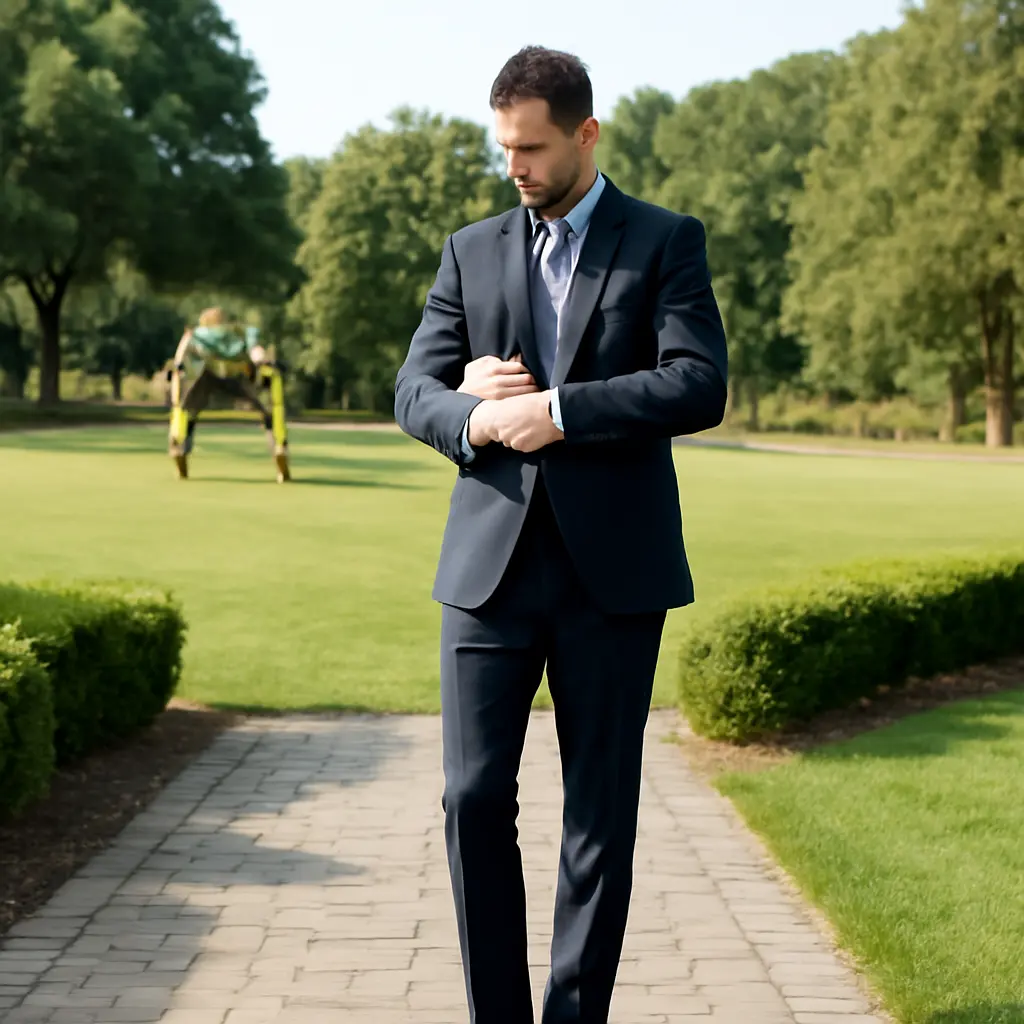
Semi-formal wedding attire for men sits between everyday business wear and black tie: polished enough for a ceremony, but not as formal as a tuxedo. The safest, most adaptable choice is a well-fitted suit—often navy, charcoal, or a seasonally appropriate lighter shade—with a dress shirt, leather shoes, and a tie when the invitation or setting calls for one. The details depend on the dress code, venue, season, and time of day. Understanding those cues helps guests look appropriately dressed without competing with the wedding party or overdressing the occasion.
Semi-Formal Wedding Attire Defines the Right Level of Polish
“Semi-formal” is a dress-code label rather than one universally fixed uniform. Emily Post’s etiquette guidance places it below formal and black-tie dress, while still calling for a suit or similarly elevated outfit for men. In practice, a suit is the most reliable starting point: it is more considered than separates alone, but does not require the evening dress codes associated with a tuxedo.
The distinction matters because wedding invitations use dress-code terms to help guests match the celebration’s formality. The Knot’s 2024 Real Weddings Study reported that the average U.S. wedding hosted 115 guests, making clear guidance useful for a large range of attendees. Guests should treat the invitation as the primary authority and use the venue, schedule, and couple’s instructions to refine the outfit.
A Suit Is the Most Dependable Starting Point
A two-piece suit—matching jacket and trousers—is the clearest interpretation of semi-formal for most weddings. Navy and charcoal are dependable choices because they work across many seasons and settings. A medium-gray or lighter suit can suit daytime and warm-weather events, while a dark suit generally feels more appropriate for evening celebrations. The garment should fit cleanly at the shoulders and waist; a costly label cannot compensate for poor fit.
Semi-Formal Is Not the Same as Cocktail or Black Tie
Dress-code labels overlap in everyday use, but they are not interchangeable. Cocktail attire commonly encourages a sharp, contemporary suit and may allow more expressive styling. Black tie ordinarily means a tuxedo, formal shirt, and bow tie—not a standard business suit. If an invitation says “semi-formal,” a tuxedo is usually unnecessary; if it says “black tie,” a regular suit is generally underdressed. When the wording is unclear, ask the couple or wedding planner rather than guessing.
Semi-Formal Wedding Attire Adapts to Invitation, Venue, and Timing
Once the suit establishes the formality, the setting determines its color, fabric, and finishing details. A useful rule is to read the invitation first, then consider whether the wedding is outdoors or indoors, daytime or evening, and warm- or cold-weather. These factors guide choices without replacing an explicit dress code.
Daytime and Outdoor Weddings
For a daytime garden, vineyard, or beach-adjacent wedding, a lighter suit in gray, tan, or muted blue can look appropriately celebratory. Breathable wool, cotton, or linen blends may be more comfortable in warm weather; linen wrinkles readily, so a blend can offer a tidier appearance. Choose shoes suited to the surface: leather loafers or derby shoes can work on firm ground, while narrow heels may sink into grass. A light suit is not automatically casual—fit, shirt, and shoes still need to look intentional.
Evening and Indoor Weddings
For an evening reception or formal indoor venue, navy, charcoal, and other darker suits usually provide a more composed look. A white or pale dress shirt, a restrained tie, and polished leather shoes complete the outfit. A dark suit is not a substitute for a tuxedo when the invitation specifies black tie, but it is a strong option for a semi-formal event.
Seasonal Fabric and Comfort
Fabric weight should suit the weather and the length of the celebration. Lightweight wool and breathable blends are useful across many conditions; heavier wool can feel more comfortable in cool months. The U.S. Environmental Protection Agency notes that heat exposure can create health risks, especially during hot conditions, so comfort is practical as well as stylistic. Check the forecast, consider whether the ceremony is outdoors, and avoid adding layers that will be uncomfortable through hours of photographs, dinner, and dancing.
Semi-Formal Wedding Attire Comes Together Through Fit and Details
After choosing a suit for the event, refine it with a shirt, tie, shoes, and accessories that support the overall level of formality. Small details matter because they can make the same suit read as polished, relaxed, or mismatched.
Shirt and Tie
A crisp white or pale-blue dress shirt is a versatile base. A tie is a sensible default for an evening wedding, a traditional venue, or an invitation that does not clarify how relaxed the dress code is. For a warmer daytime event, the tie may be optional if the couple’s guidance and the setting support a less formal look. Choose a tie that complements rather than exactly matches the suit, and avoid novelty designs that draw attention away from the celebration.
Shoes and Belt
Leather oxfords and derbies are reliable with a traditional suit; loafers can work for a more relaxed daytime setting if they are polished and in good condition. Match the belt to the shoes when wearing both. Clean, well-maintained footwear is more important than an elaborate style, and athletic sneakers are usually a poor fit unless the couple specifically invites them.
Accessories and Grooming
A pocket square, watch, or understated tie bar can add personality without overwhelming the outfit. Keep accessories coordinated, not identical, and avoid wearing a boutonniere unless it is provided or approved by the wedding party. A final check—pressed clothes, trimmed loose threads, clean shoes, and a shirt that stays tucked—often improves the result more than adding another accessory.
Semi-Formal Wedding Attire Avoids Common Guest Mistakes
A well-planned outfit respects both the dress code and the couple’s day. The most frequent errors are usually not about fashion expertise; they come from overlooking the invitation, choosing clothes that do not fit, or interpreting “semi-formal” as permission to wear ordinary office or weekend clothing.
- Do not wear a tuxedo unless the dress code or couple calls for black tie.
- Avoid jeans, casual sneakers, and visibly distressed clothing unless the invitation explicitly welcomes them.
- Do not assume an outdoor wedding is automatically casual; follow the stated dress code.
- Avoid white or other colors that could be mistaken for bridal attire, and follow any cultural or couple-specific color guidance.
- Do not copy the wedding party’s distinctive look if you know its colors or styling.
- Check the full invitation for requests about cultural dress, religious observance, weather, or venue restrictions.
A practical example is a late-afternoon garden wedding marked “semi-formal”: a medium-blue or gray suit, light shirt, optional tie depending on the invitation’s tone, and polished loafers can balance comfort with ceremony. For an evening hotel reception, the same guest might choose a navy suit, white shirt, tie, and dark leather shoes. In both cases, the invitation—not a universal rule about weddings—settles the final choice.
Conclusion: Semi-Formal Wedding Attire Starts with the Invitation
The most dependable semi-formal wedding fit for men is a well-fitted suit, adapted to the invitation, venue, season, and time of day. Navy, charcoal, and gray offer versatile foundations; the shirt, tie, shoes, and accessories then adjust the outfit’s formality. Semi-formal is neither everyday casualwear nor black tie, so guests should avoid both extremes and respect any instructions from the couple.
Before the event, reread the invitation, check the forecast, and try the complete outfit with its shoes and accessories. That simple preparation makes it easier to arrive comfortable, appropriately dressed, and focused on celebrating with the couple.
Sources: Emily Post Institute, Dress Codes: What to Wear to Every Type of Wedding, https://emilypost.com/advice/dress-codes-what-to-wear-to-every-type-of-wedding; The Knot, 2024 Real Weddings Study, https://www.theknot.com/content/real-weddings-study; U.S. Environmental Protection Agency, Climate Change and Extreme Heat, https://www.epa.gov/climate-indicators/climate-change-indicators-heat-waves.